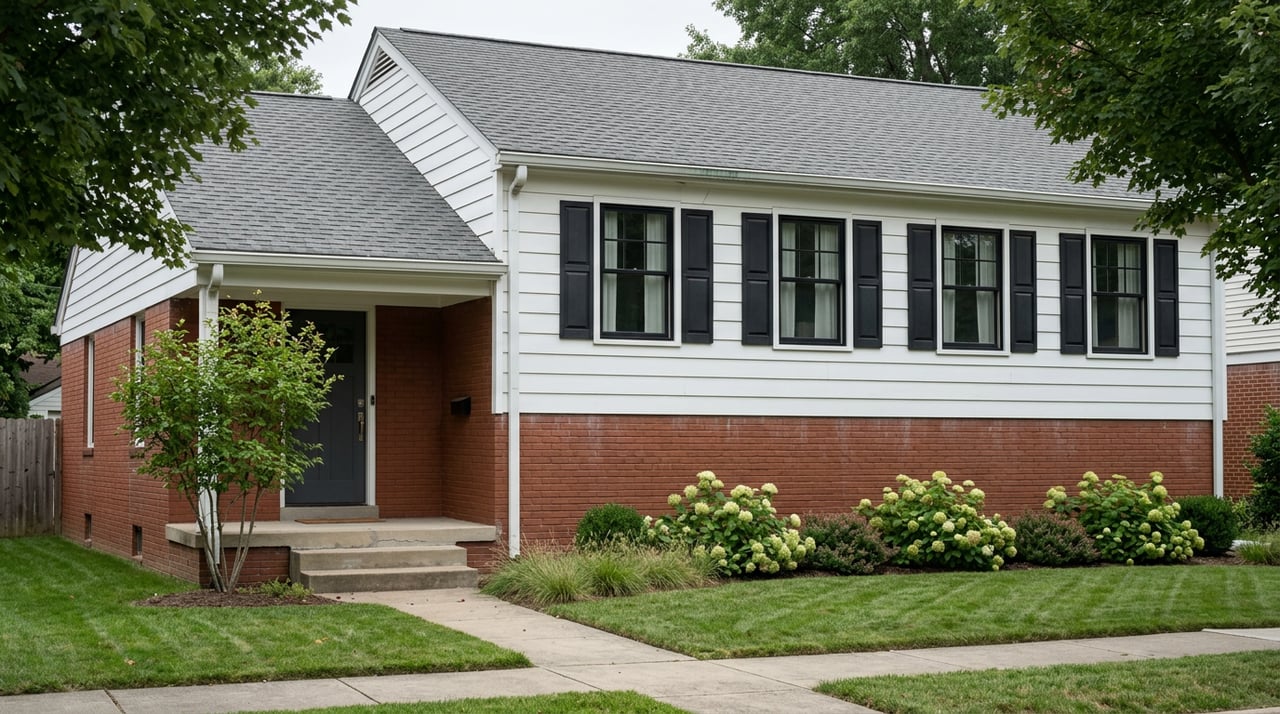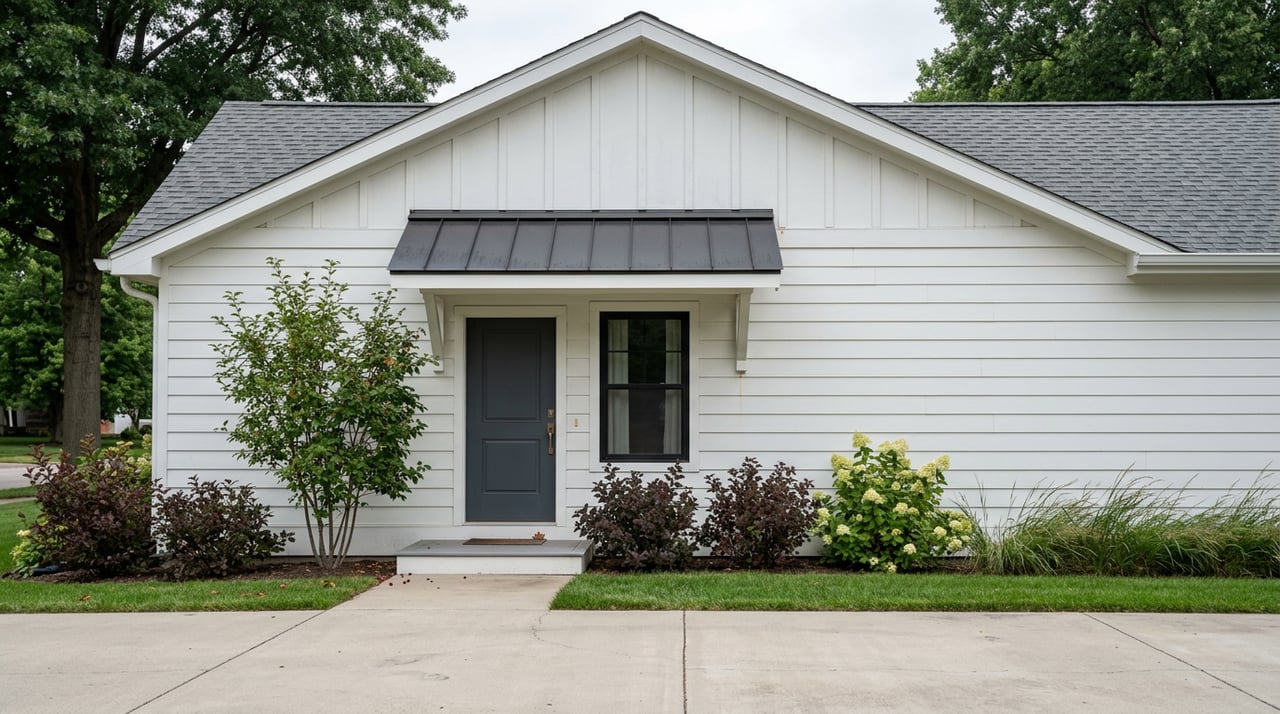
"not built for the kind of enrollment that we have today"
That's Purdue President Mung Chiang, talking to reporters back in 2024 about why the university needed to pull back on admissions. It sounds like a campus planning problem. It is also, quietly, the most useful sentence for understanding why a small three-bedroom house near campus might sit for three weeks this summer when it would have sold in a matter of days two years ago.
For a decade, Purdue's growth was the story of West Lafayette real estate. Enrollment on the West Lafayette campus climbed 42 percent since 2014 and 20 percent just since 2020, and every one of those students needed a bed. A lot of those beds turned out to be bedrooms in ordinary single-family homes near campus, bought by investors who could count on rental demand almost regardless of what the broader housing market was doing. That playbook worked reliably right up until two things happened in the same twelve months: Purdue built its way out of the shortage, and Purdue decided to stop growing so fast on purpose.
The decade that trained investors to bid on starter homes
The enrollment numbers behind that decade are worth sitting with for a second. Purdue's West Lafayette campus hit a combined system total of 58,009 students in fall 2024, its largest incoming freshman class in school history at 10,628 students. University leadership had spent that whole summer warning that the growth had outrun campus housing capacity, and the fall numbers confirmed it: more students arrived than the dorms could hold.
That gap is what made small homes near Ross-Ade Stadium and the academic core valuable in a way that had little to do with square footage or curb appeal. A three-bedroom house that could be rented by the room to graduate students or staff carried a rental income floor that made it attractive to buy almost regardless of the school-year cycle. Proximity to campus, not condition, was doing most of the pricing.
The beds that landed in the last twelve months
Then the supply caught up, fast. In the span of a single year, three purpose-built housing projects opened within walking distance of campus:
- August 2025 - 3rd & West opened in Purdue's Discovery Park District with 984 beds, a public-private partnership between Purdue Research Foundation and American Campus Communities.
- August 2025 - VERVE II, a 143-unit complex near State Street, added 449 more beds.
- August 2026 - South Hall was dedicated this month, adding nearly 900 beds and connecting directly to the newly expanded Hillenbrand Dining Court.
Add it up and West Lafayette absorbed roughly 2,300 new purpose-built student beds in the twelve months ending this August. That is not a rounding error. It is enough capacity to take a meaningful bite out of the demand that used to spill into the off-campus rental market, and there is more on the way: The Standard at West Lafayette is under construction with 678 beds slated for fall 2027, and LV Collective has announced two more complexes near campus, each with 500 apartments, also targeting 2027.
Why Purdue hit the brakes at the same time
Here is the part that makes the timing matter. Purdue did not just build more beds. It also decided to admit fewer students. Fall 2025 brought 8,914 new undergraduates to the West Lafayette campus, a sharp step down from the record 10,628 freshmen who arrived the year before. Combined system enrollment slipped from 58,009 in 2024 to 57,310 in 2025.
Chiang was direct about the reasoning back in 2024, telling University Senate leaders the school needed to focus on efforts "to decongest and de-densify" the campus. That is unusual language from a university that had spent a decade doing the opposite. It also means the surge in beds and the pullback in incoming students landed on the same calendar, which is exactly the combination that changes what a home near campus is worth to hold as a rental. Purdue's board of trustees approved a new ten-year capital projects plan on August 7, 2026, a sign that facility investment keeps expanding even as admissions growth is being managed on purpose.
To be clear, demand for Purdue housing has not collapsed. Preleasing for the 2025-26 academic year ran at 76.7 percent as of January 2025, well above the 54.6 percent average across the roughly 200 university markets tracked by Yardi Matrix at the time. Students are still coming and still need places to live. What has changed is where that demand gets absorbed first, and purpose-built beds with amenities, meal plans, and shorter leases are now first in line ahead of a converted bedroom in someone's spare-room rental.
Two different West Lafayettes, one blended headline number
If you have looked at West Lafayette listing sites this summer and come away confused, that confusion is the story, not a data error. Track the city's own numbers across sources for the same season and they genuinely disagree. Figures covering the three months ending in May 2026 showed the median sale price down close to 5 percent year over year, with the average number of days a home sat on the market roughly doubling, from 11 to 23, even though the number of homes that actually sold that May rose from 58 to 69. A separate tracker's numbers for June 2026 told a milder version of the same story: days on market crept up from 32 to 38, while sales volume jumped from 200 to 249 homes. A third estimate for the same stretch showed typical home values still climbing modestly and listings moving to pending in about nine days. None of these are wrong. They are each catching a different slice of a market that is behaving in two directions at once.
| Campus-adjacent, investor-facing | Family school-zone (Happy Hollow / Cumberland attendance areas) | |
|---|---|---|
| What historically drove the pace | Guaranteed rental income from student or staff tenants | School district assignment, lot size, proximity to US-52 and downtown Lafayette |
| What changed in the last year | New purpose-built beds compete directly for the same renters | Little direct exposure to student housing supply |
| What to expect right now | Longer marketing time than the neighborhood is used to | Continued competition for well-priced, move-in-ready listings |
A city where one estimate has homes going to pending in nine days and another has the average listing sitting for 38 isn't describing one market twice. It's describing two markets that happen to share a mailing address.
What this actually means if you're buying or selling
If you own or are considering a small home within walking distance of campus that has functioned as a rental, this year is the one to re-underwrite the numbers rather than assume the last decade's math still holds. The tenant base you were counting on now has 2,300 new beds competing for its attention, with another 1,700-plus units coming by 2027. That does not make the property worthless. It means the rent projection and the resale timeline both deserve a second look before you price a listing or size up an offer.
If you are a move-up family looking in the Happy Hollow or Cumberland Elementary attendance areas, the student housing story mostly does not touch you. That segment of the market is driven by school district assignment and lot characteristics, not by rental yield, and the pressure from Purdue's new beds is concentrated closer to campus. Expect the pace there to still feel competitive, and have financing lined up before you tour rather than after.
If you are the small investor weighing a purchase near campus for the first time, the opportunity has not disappeared, but it has changed shape. A property competing on price or condition against a brand-new complex with a dining hall attached needs its own reason for a tenant to choose it. That is a different conversation than it was three years ago, and it is worth having before you make an offer, not after closing.
FAQ
Does this mean buying a rental property near Purdue is a bad idea now? Not automatically. It means the rent assumptions need to reflect the new competition rather than the pre-2025 shortage. A property with strong condition, parking, or a location advantage can still perform, but the automatic bidding driven by scarcity is easing as new beds come online.
Will Happy Hollow and Cumberland zone prices keep climbing no matter what happens near campus? Those areas are driven by different buyers with different priorities, so they are less directly exposed to the student housing pipeline. They are not immune to broader rate or economic shifts, but the mechanism driving this particular divergence, new purpose-built beds absorbing rental demand, is concentrated in the campus-adjacent segment rather than the family school zones.
West Lafayette's market has never been a single story, but this year the gap between its two halves is wide enough to change what a listing price or a days-on-market number actually tells you. If you are trying to figure out which West Lafayette you are actually buying or selling into, The O'Shea Team can walk through what your specific block is seeing right now. Get a Free Home Valuation and we'll tell you straight what the current numbers mean for your situation.