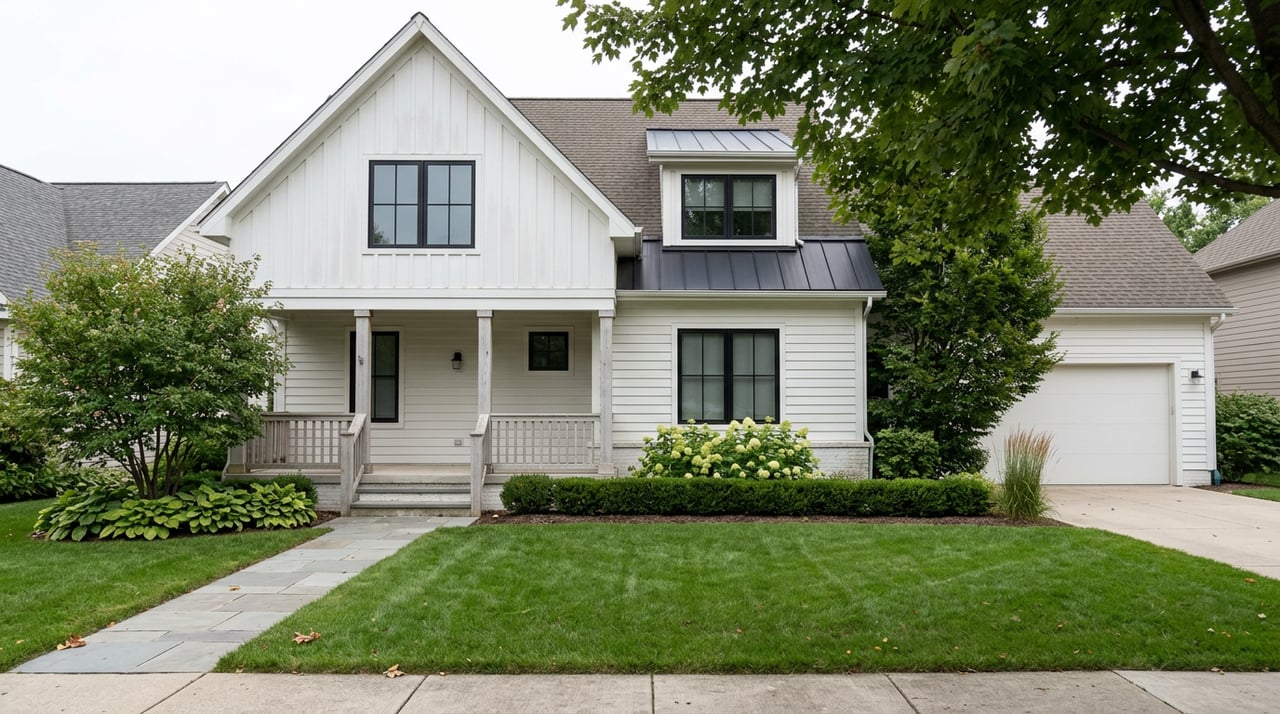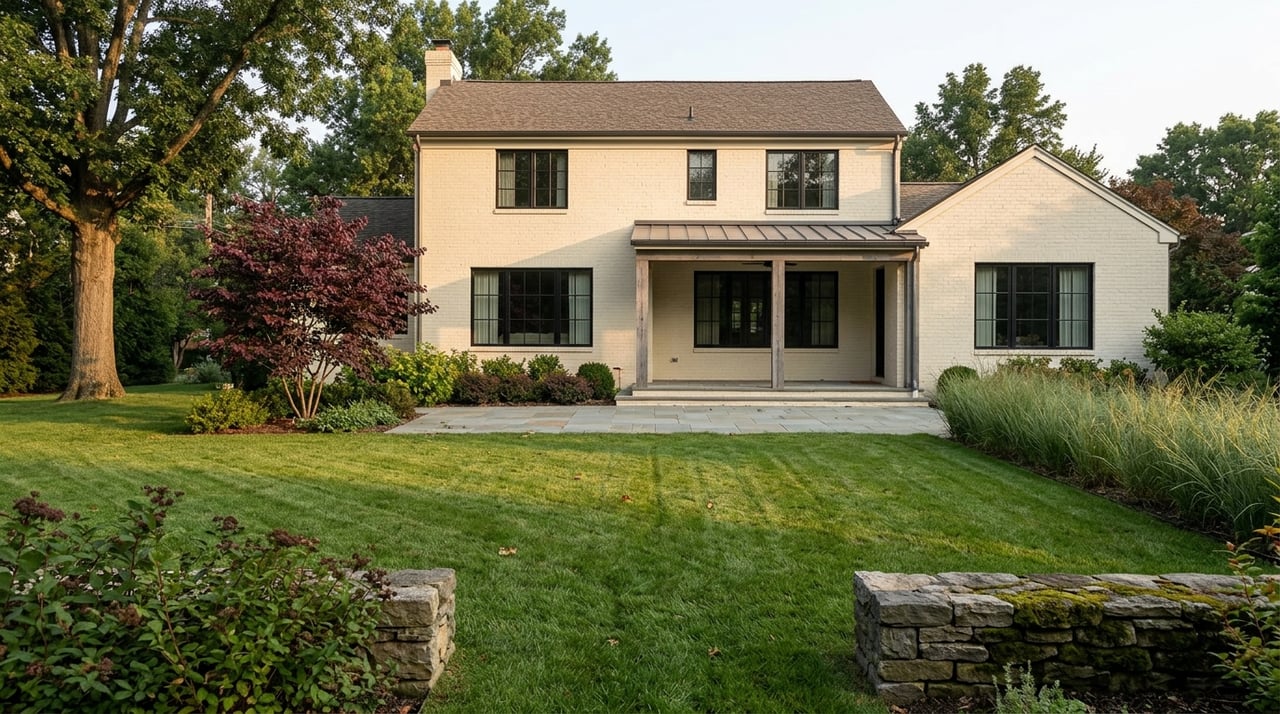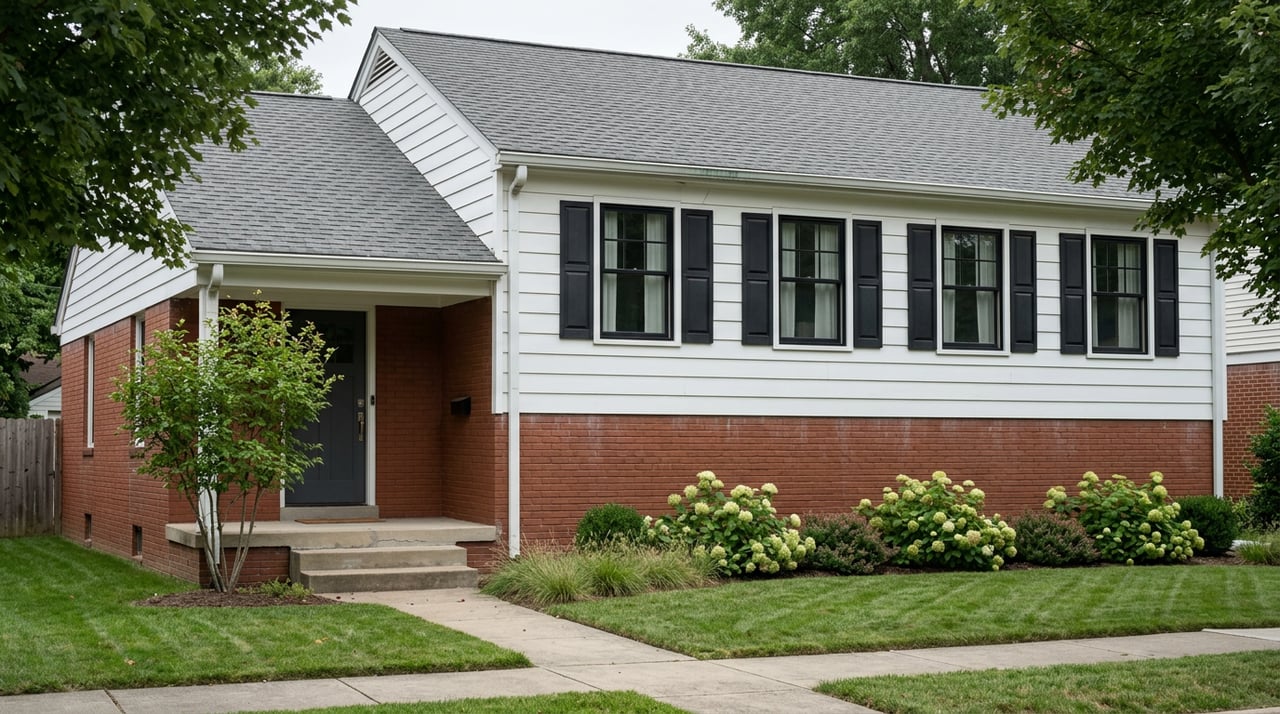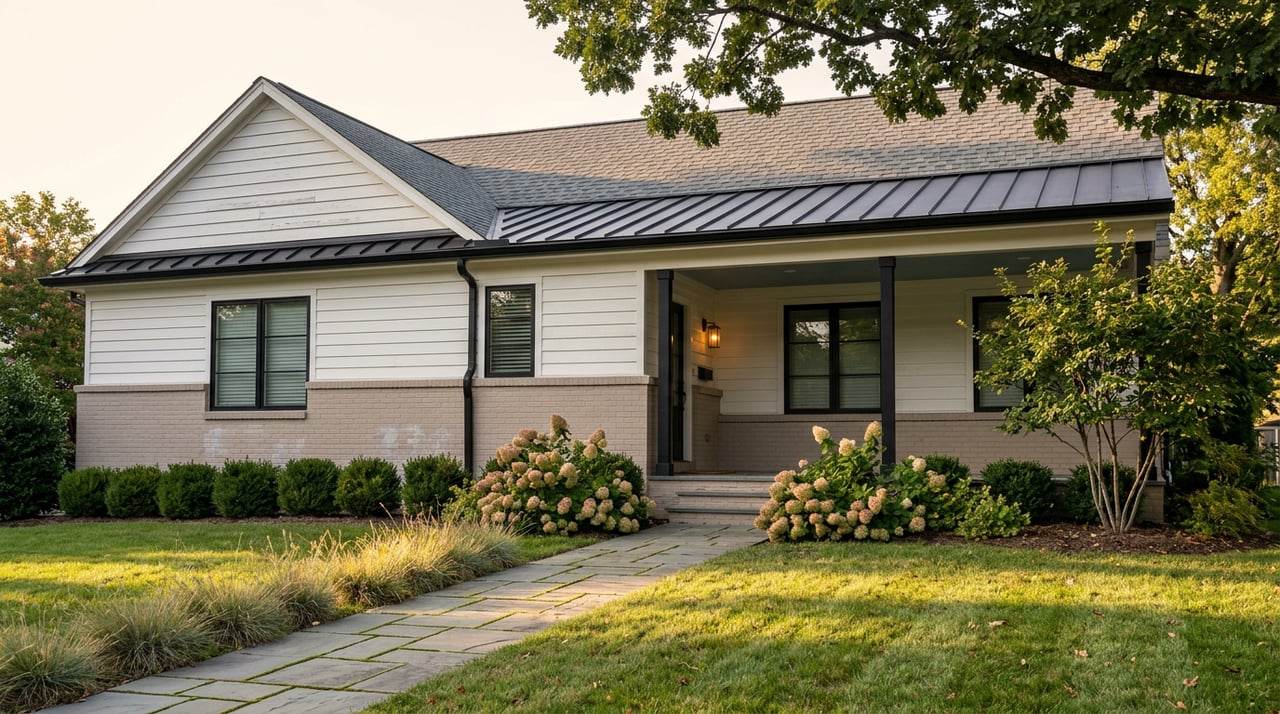
Type "Raineybrook homes for sale" into any portal and you get one clean feed: one median price, one set of photos, one implied set of rules. Buy inside that boundary and every home should come with the same HOA, the same dues, the same schools.
That assumption falls apart the moment you check the deed. Raineybrook Pointe is a homeowners association of 107 units with a $330 yearly assessment, managed by Hart Consulting. A few streets over, Chesapeake Pointe at Raineybrook is a separate association covering 65 units in its current phase, with its own bylaws and its own dues structure. Raineybrook Bay, a distinctly platted subdivision inside Lafayette city limits, tells prospective buyers on its own site that homes there are zoned to Tippecanoe School Corporation: McCutcheon High School, Southwestern Middle School, and Mayflower Elementary. None of that shows up in the single median price a portal hands you. It only shows up once you start reading the actual listing sheet, phase by phase.
The name outgrew the plat
"Raineybrook" started as a name for a subdivision on the south side of Lafayette. Over time it became a marketing umbrella. A directory of Lafayette-area subdivisions lists Raineybrook Bay and Raineybrook Estates as separately platted developments inside Lafayette city limits, distinct entries with their own boundaries, not subsections of one master plan. Add in Raineybrook Pointe and Chesapeake Pointe as separately governed HOAs, and what you have is several legally distinct developments that share a marketing name because it sells better as one search term than four smaller ones would.
That matters because buyers rarely check which entity they're actually purchasing into until the HOA documents show up during due diligence. A buyer who assumes "Raineybrook" means one governing document might be surprised to learn their $330 annual assessment at Raineybrook Pointe covers a different budget, a different board, and different rules than a neighbor's dues two phases over at Chesapeake Pointe.
Here's what's documented across the branded area:
| Branded name | What it actually is | Governance or school note |
|---|---|---|
| Raineybrook Pointe | Separate HOA | 107 units, $330 annual assessment |
| Chesapeake Pointe at Raineybrook | Separate HOA | 65 units in current phase |
| Raineybrook Bay | Separately platted subdivision, Lafayette city | Zoned to Tippecanoe School Corporation: McCutcheon HS, Southwestern MS, Mayflower ES |
| Raineybrook Estates | Separately platted subdivision, Lafayette city | Listed as its own entry, not a subsection of one master plan |
Four names, four sets of facts, one marketing umbrella. A buyer comparing two homes that both say "Raineybrook" in the listing description could be comparing a $330-a-year assessment against a differently priced one at Chesapeake Pointe, or a home zoned to McCutcheon High School against one zoned to a different corporation entirely.
Even the tax assessor doesn't treat it as one place
If you assumed the county at least treats Raineybrook as a single, internally consistent area for valuation purposes, that assumption doesn't hold either. Tippecanoe County's Assessor conducts cyclical reassessment by grouping properties into defined "neighborhoods" for comparable-sales tracking. The assessor's own public mapping groups Raineybrook Phase 1 together with an entirely separate platted area called Concord Place under a single neighborhood code, NBH 637, for reassessment purposes. The physical description in that county record notes Raineybrook sits under a quarter mile from U.S. 231 South and about eight miles from Purdue University, while Concord Place sits along Concord Road near Wea School Road, closer to U.S. 52, a different corridor entirely.
Two areas with different roads, different distances to Purdue, and no shared plat get grouped into one valuation-tracking neighborhood because the assessor's criteria weigh construction type and property age alongside location. That's a reasonable methodology for the county's reassessment work. It just means the administrative definition of "Raineybrook's neighborhood" for tax comparables is not the same definition a real estate listing uses when it slaps "Raineybrook" on a home for search visibility. Buyers pricing a home by comparing it to "similar Raineybrook sales" need to know which definition they're actually comparing against.
What this changes if you're comparing homes here
None of this means Raineybrook is a bad place to buy. It means the name alone tells you less than it appears to. A few practical steps close that gap:
Ask for the HOA name specifically, not just confirmation that "there's an HOA." Raineybrook Pointe and Chesapeake Pointe are different associations with different dues and different rules. A listing agent should be able to name which one applies to a specific address, and the annual assessment amount should show up in writing before an offer, not after closing.
Verify school assignment by the address, not the subdivision name. Raineybrook Bay's own materials confirm zoning to Tippecanoe School Corporation. That's useful precisely because it's specific. A buyer choosing between two homes under the same "Raineybrook" heading should ask which school corporation each address feeds into rather than assuming the answer is the same for both. Indiana school corporation boundaries frequently don't track city limits or subdivision plats, and Tippecanoe School Corporation covers a wide stretch of outer Lafayette alongside the more centrally located Lafayette School Corporation.
Don't treat "similar Raineybrook sales" as an automatic apples-to-apples comp set. Since the assessor's own NBH 637 grouping mixes Raineybrook Phase 1 with the unrelated Concord Place area, ask your agent to confirm which specific phase and platted section a comparable sale actually sits in before it's used to justify a price.
As of early September 2026, active listings inside the Raineybrook footprint ranged from about $440,000 to $540,000, on streets including Chickadee Drive, Cardinal Drive, and Ravenstone Drive. That spread alone is a signal that "Raineybrook" isn't pricing as one uniform product, and the HOA and school differences documented above help explain part of why.
Frequently asked questions
Is there one HOA that covers all of Raineybrook? No. Raineybrook Pointe and Chesapeake Pointe at Raineybrook are documented as separate associations, each with its own unit count and its own dues. Always confirm which specific association applies to an address before assuming a shared due amount.
Does every home in Raineybrook feed the same schools? Not necessarily. Raineybrook Bay is specifically documented as zoned to Tippecanoe School Corporation, covering McCutcheon High School, Southwestern Middle School, and Mayflower Elementary. Since Indiana school corporation lines don't always follow subdivision names or city limits, confirm school zoning for the specific address you're considering rather than assuming it from the marketing name.
Why would the county group Raineybrook with an unrelated area like Concord Place? The Tippecanoe County Assessor's cyclical reassessment process groups properties by shared traits like construction type and age for comparable tracking, not by shared plat or proximity alone. That produces valuation neighborhoods that can differ meaningfully from how real estate listings define the same name.
Raineybrook is still one of the larger and more established pockets of south Lafayette, with its own monthly community magazine and enough housing stock to support a real range of price points and floor plans. The name just isn't a shortcut for uniform rules. If you're comparing homes here, or anywhere else in Greater Lafayette or the Indianapolis suburbs where a subdivision name might be doing more marketing work than geographic work, The O'Shea Team can walk through the actual HOA documents and school zoning for a specific address before you write an offer, not after.